 Solstability
Slope stability analysis
Slopes, embankments and cuts by limit equilibrium. Find the critical slip surface with eight methods, add water, loads and reinforcement, and verify the result with your design standard.
Free with a Solplan account
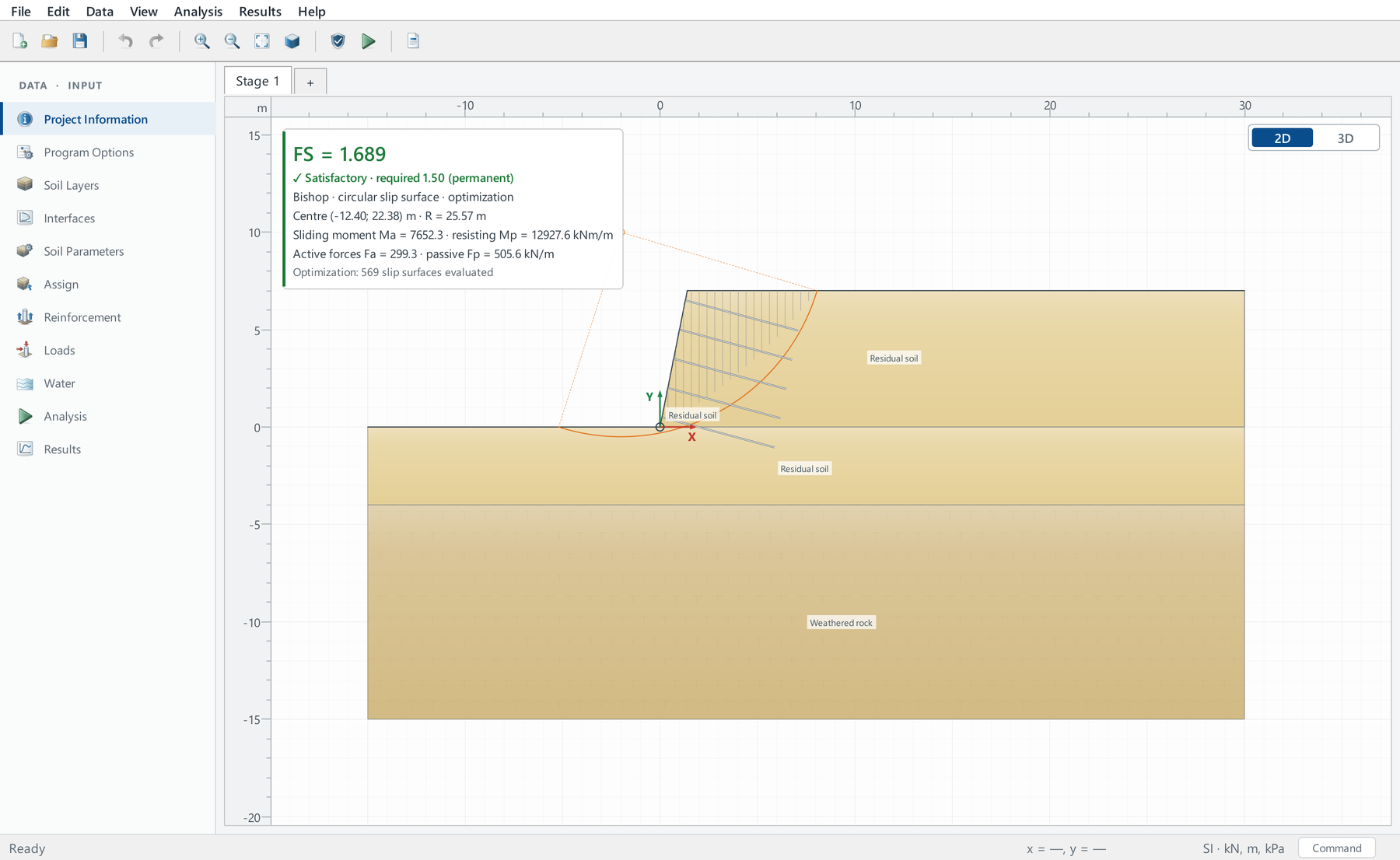
The critical slip surface, found and verified
Limit equilibrium of slopes, embankments and cuts: search, compare the methods, reinforce and verify in one model.
Search
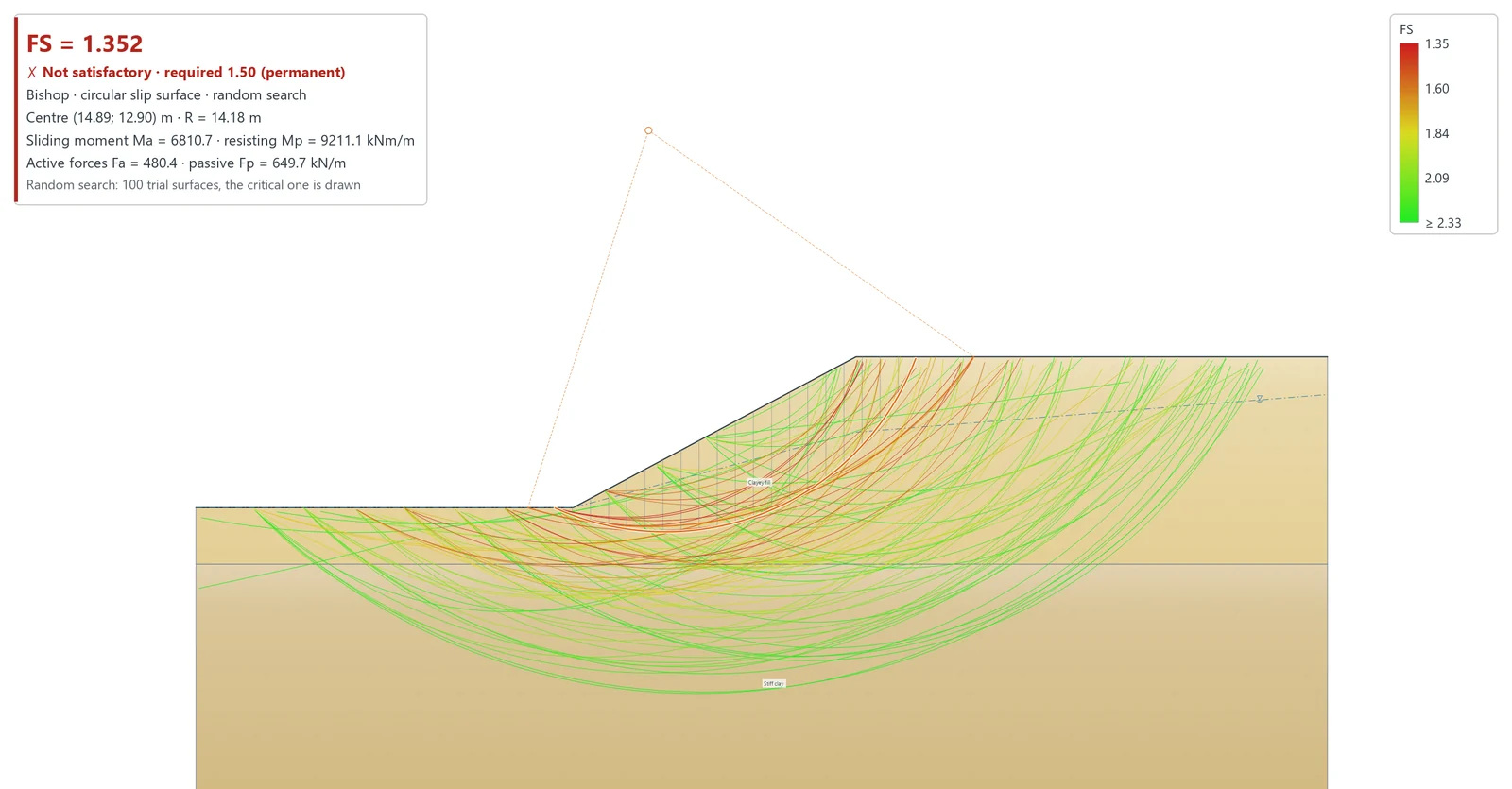
Find the critical slip surface
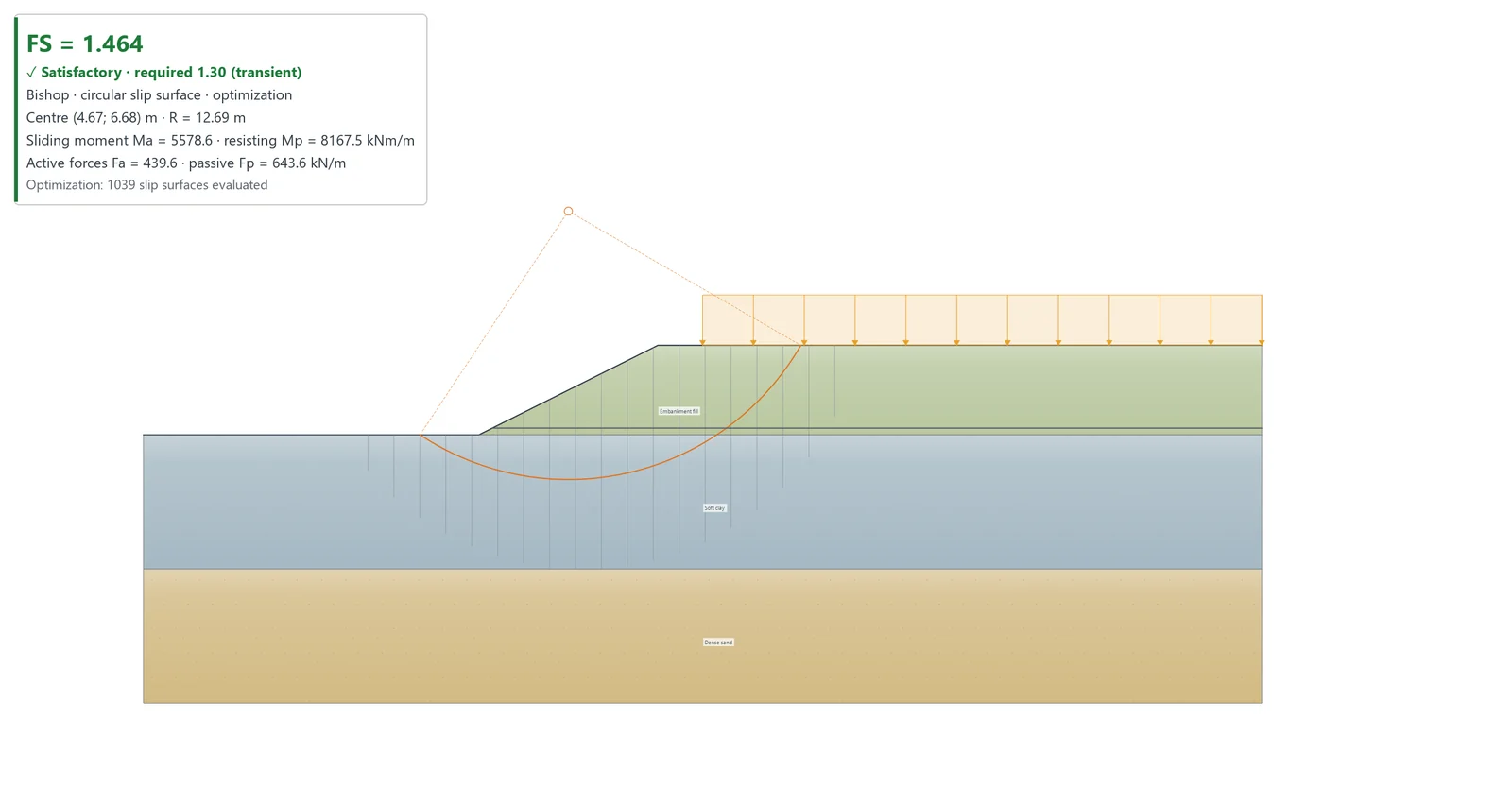
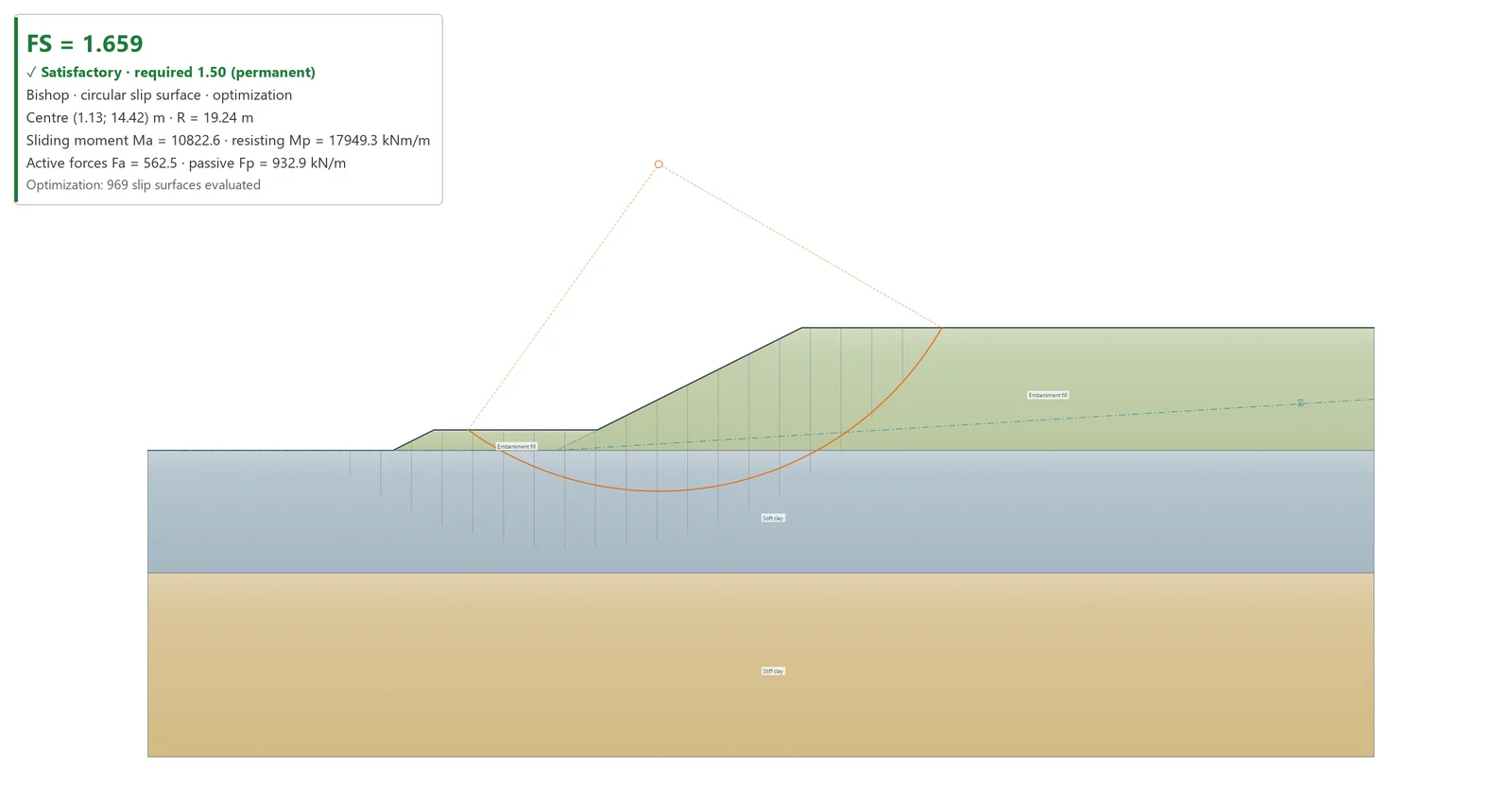
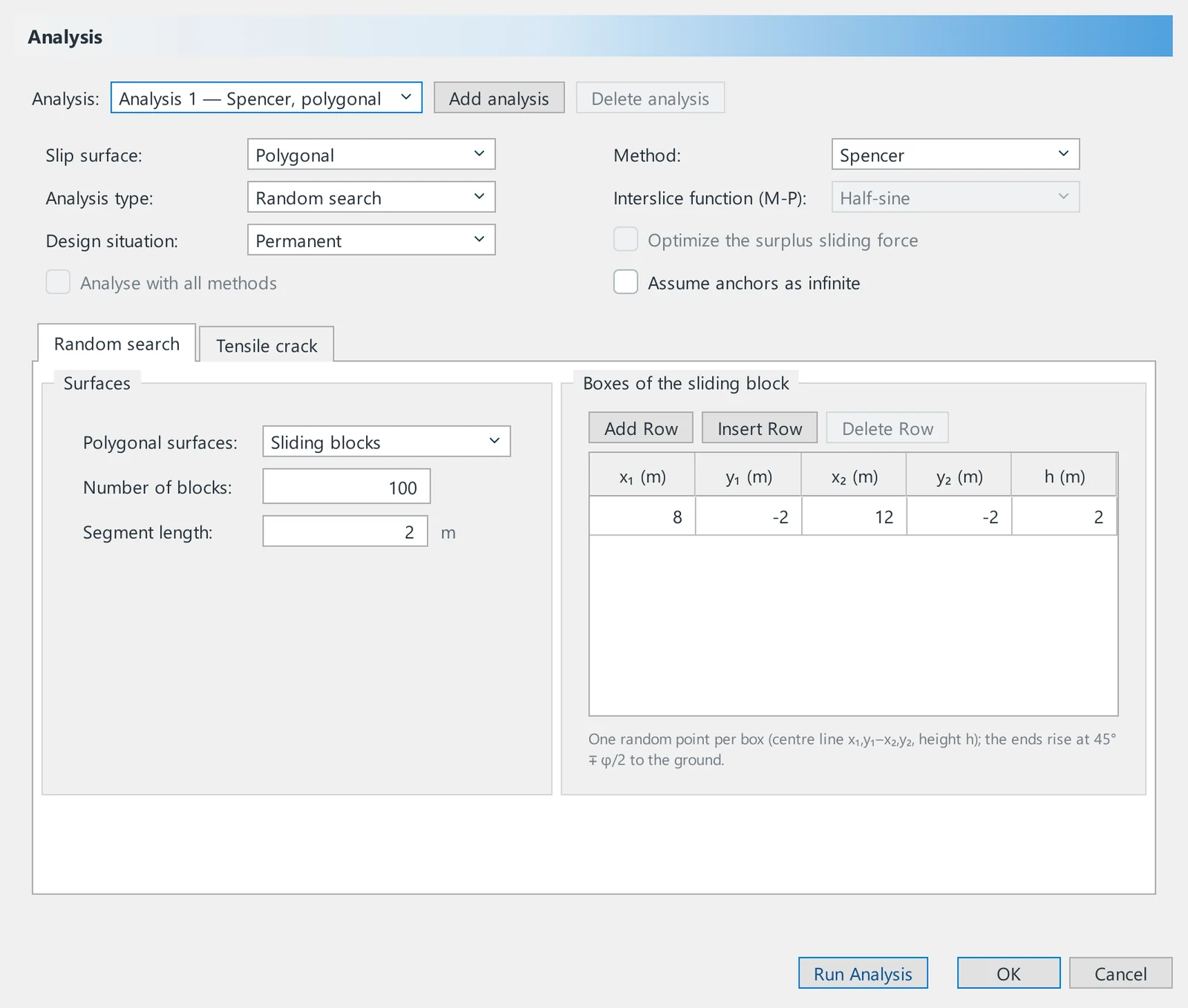
Optimize a circle or a polygon from your first guess, evaluate a grid of circles, or let a random search try circles, irregular surfaces or sliding blocks. Every trial surface is drawn in the colour of its factor of safety.
Methods
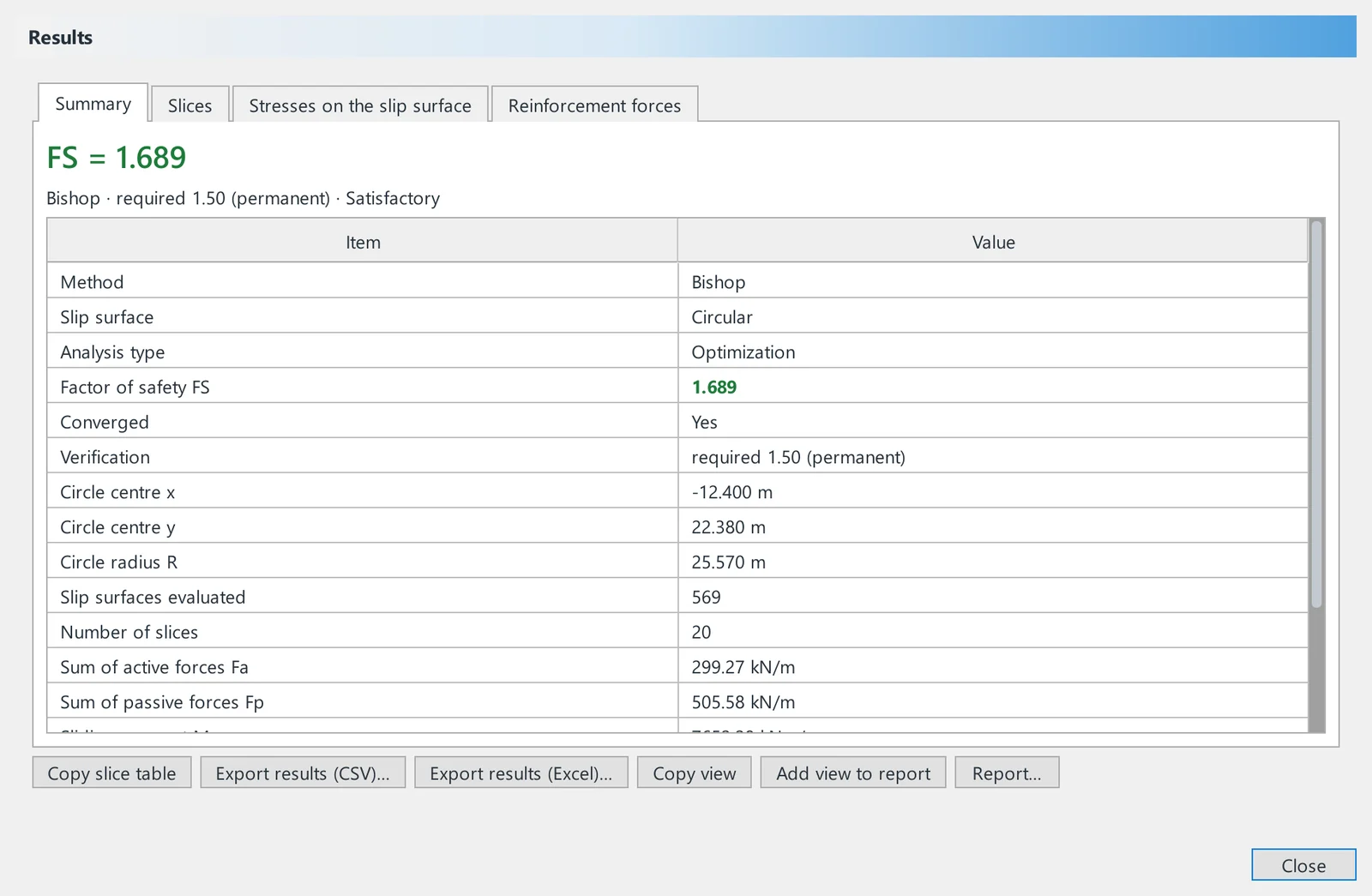
Eight limit equilibrium methods
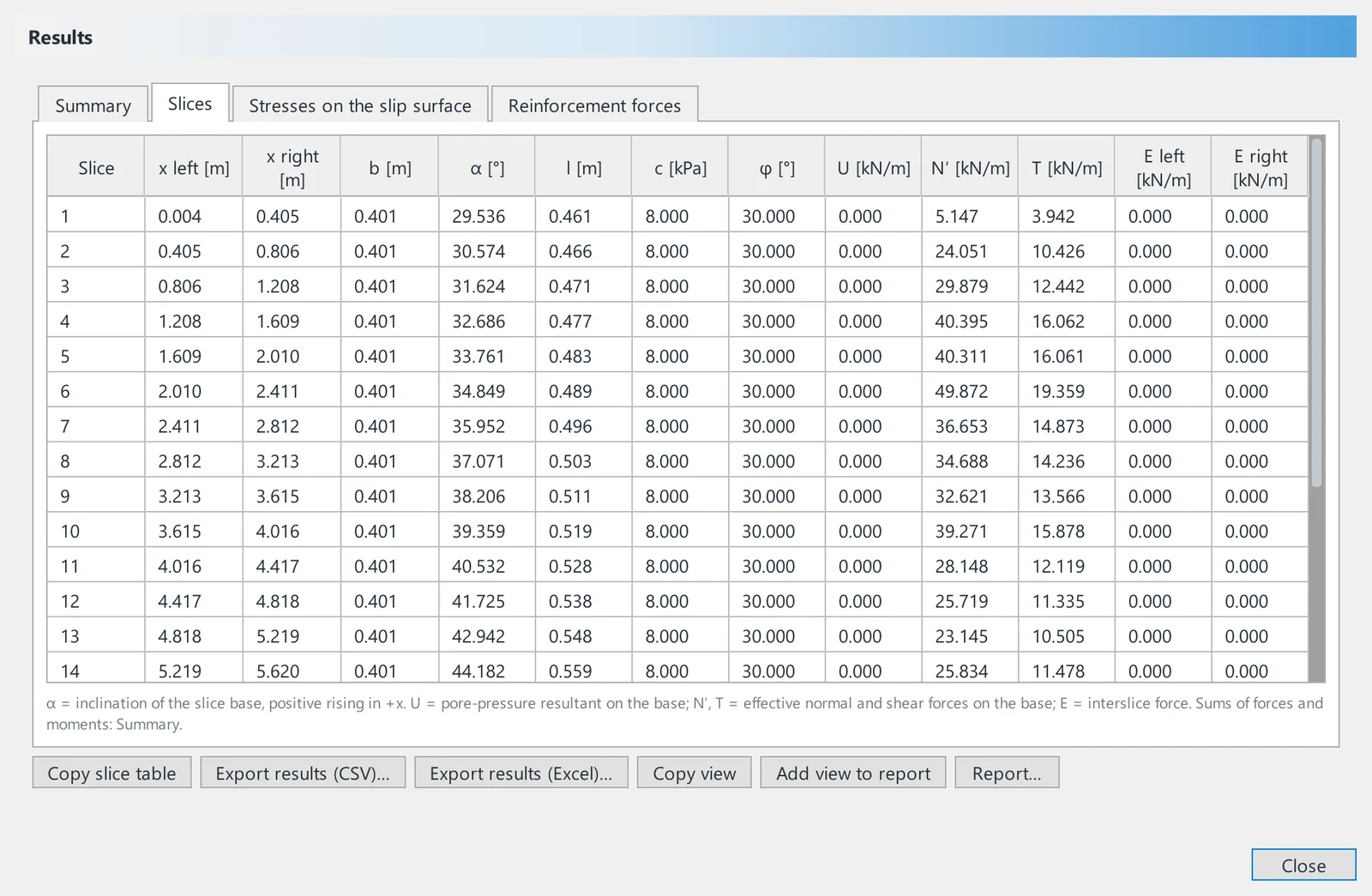
Bishop, Fellenius / Petterson, Spencer, Janbu, Morgenstern-Price, Shahunyants, ITFM and Sarma. Analyse one surface with all of them and compare the factors of safety, the sliding and resisting moments and the forces in one table.
Reinforcement
Anchors, nails, geotextiles and piles
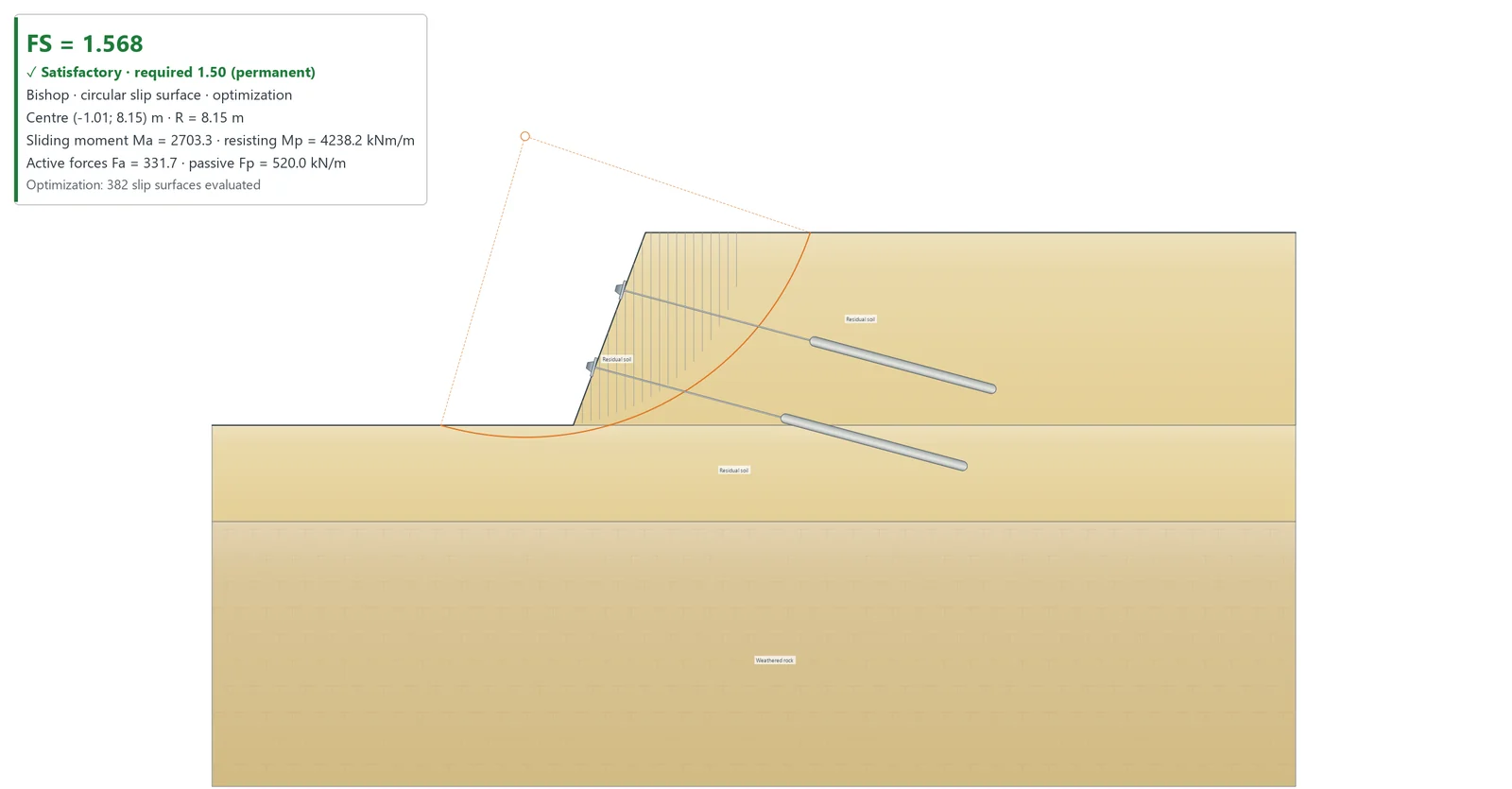
Place anchors, soil nails, geotextiles and stabilizing piles on the drawing. Each element acts with the force it carries where the slip surface crosses it, and the results list that force for every element.
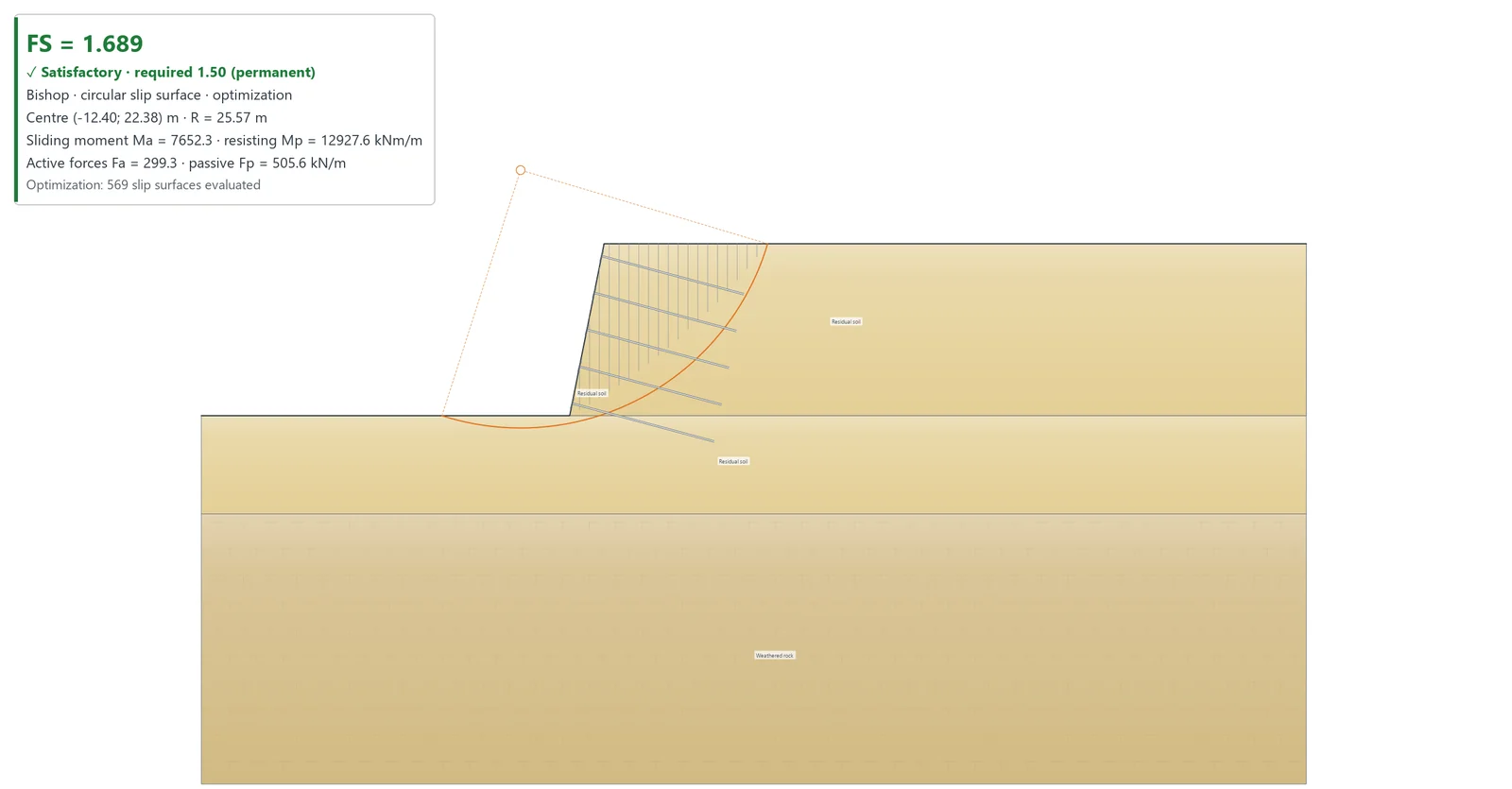
Stages
Construction stages with cuts and fills
Each stage keeps its own water, loads, reinforcement and analyses. An excavation or an embankment added in a later stage changes the ground for the stages that follow.
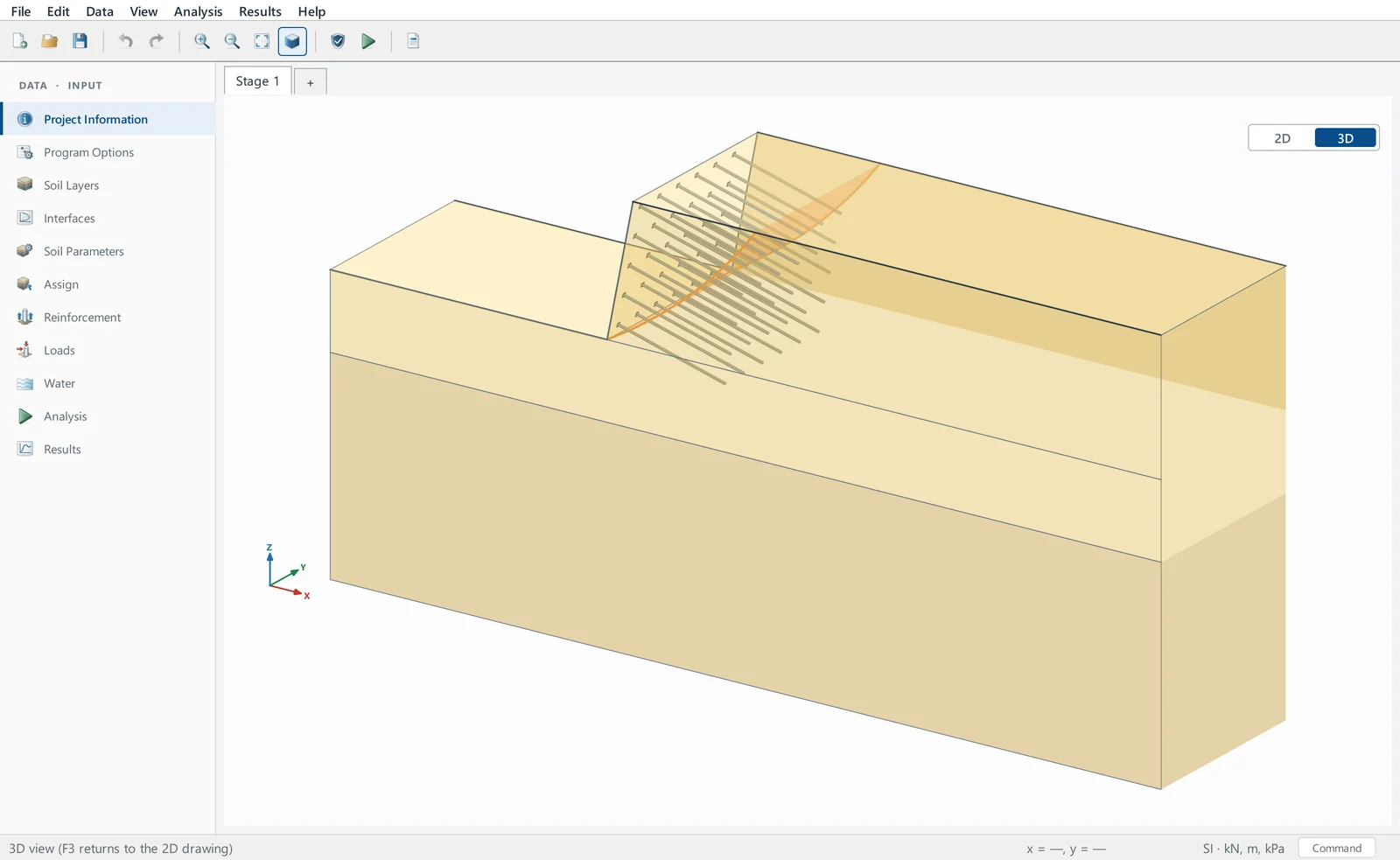
3D view
Check the model in 3D
One key switches the drawing to a 3D view of the slope, the soils, the water, the loads and the reinforcement, with the slip surface cut through the body.
Solstability across applications
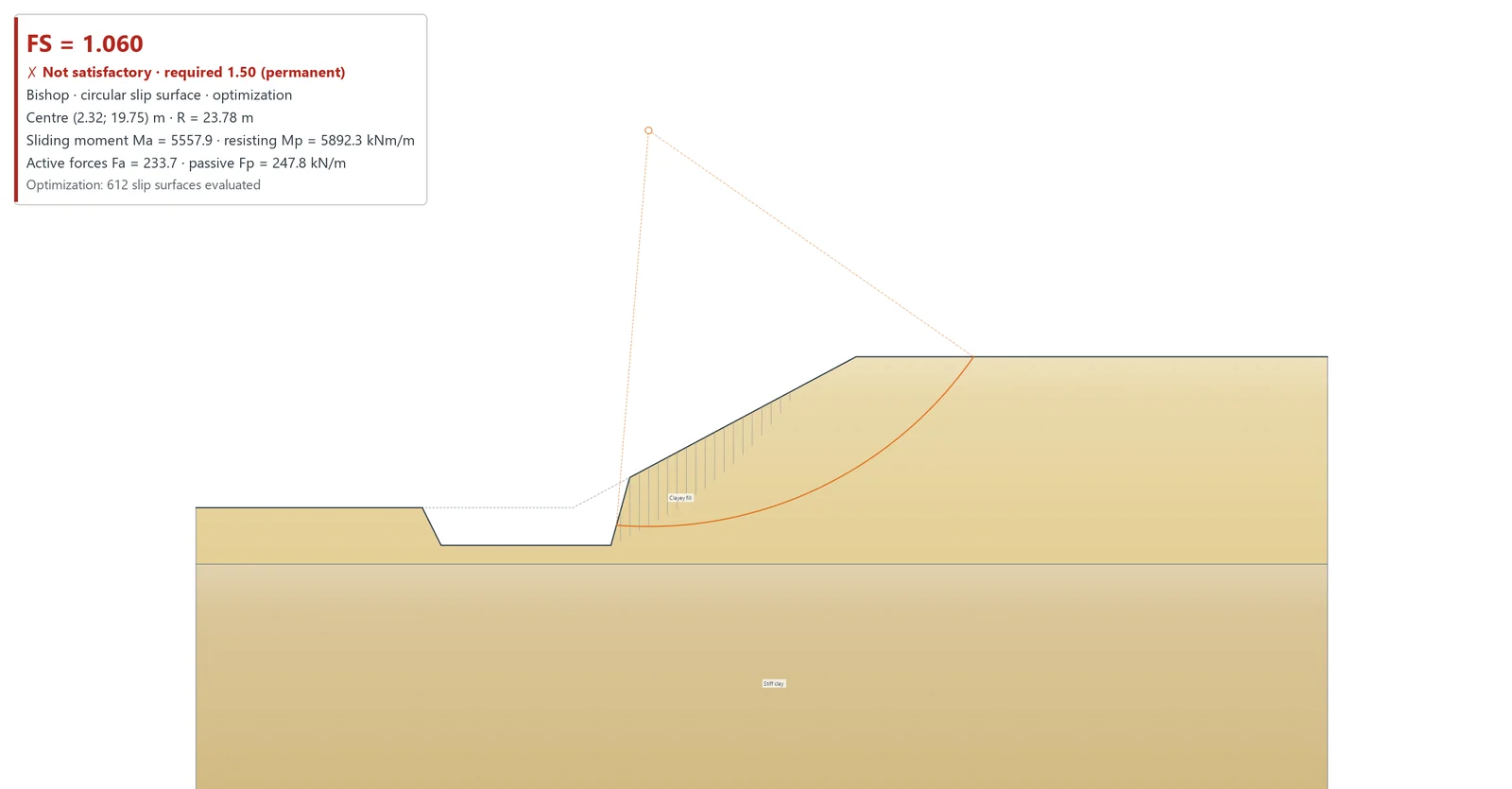
From the examples of the user manual, each analysed in Solstability.
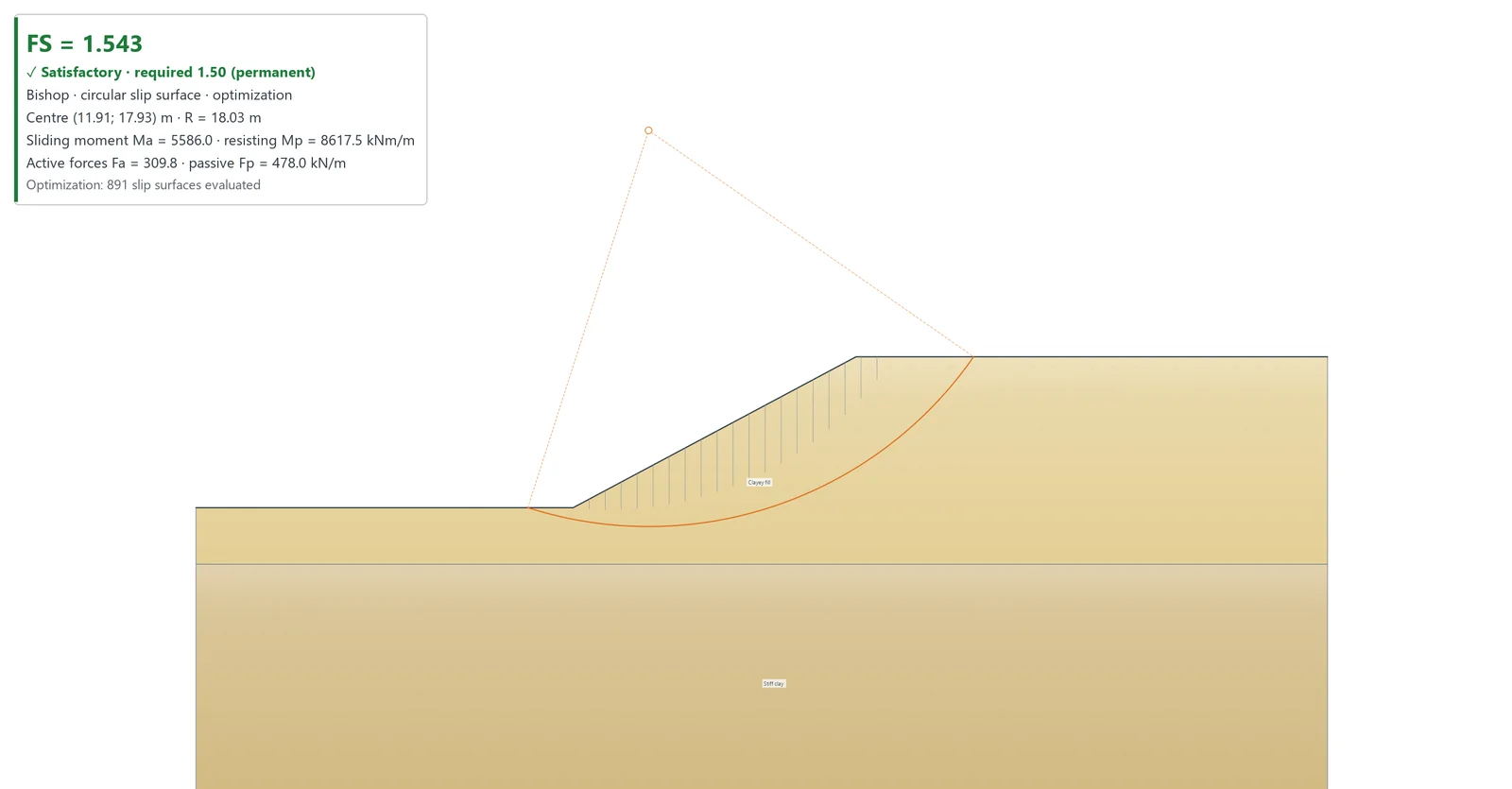
Ground water and the design check
An embankment on clay with a ground water table: optimize the circle and compare the factor of safety with the requirement of the design situation.
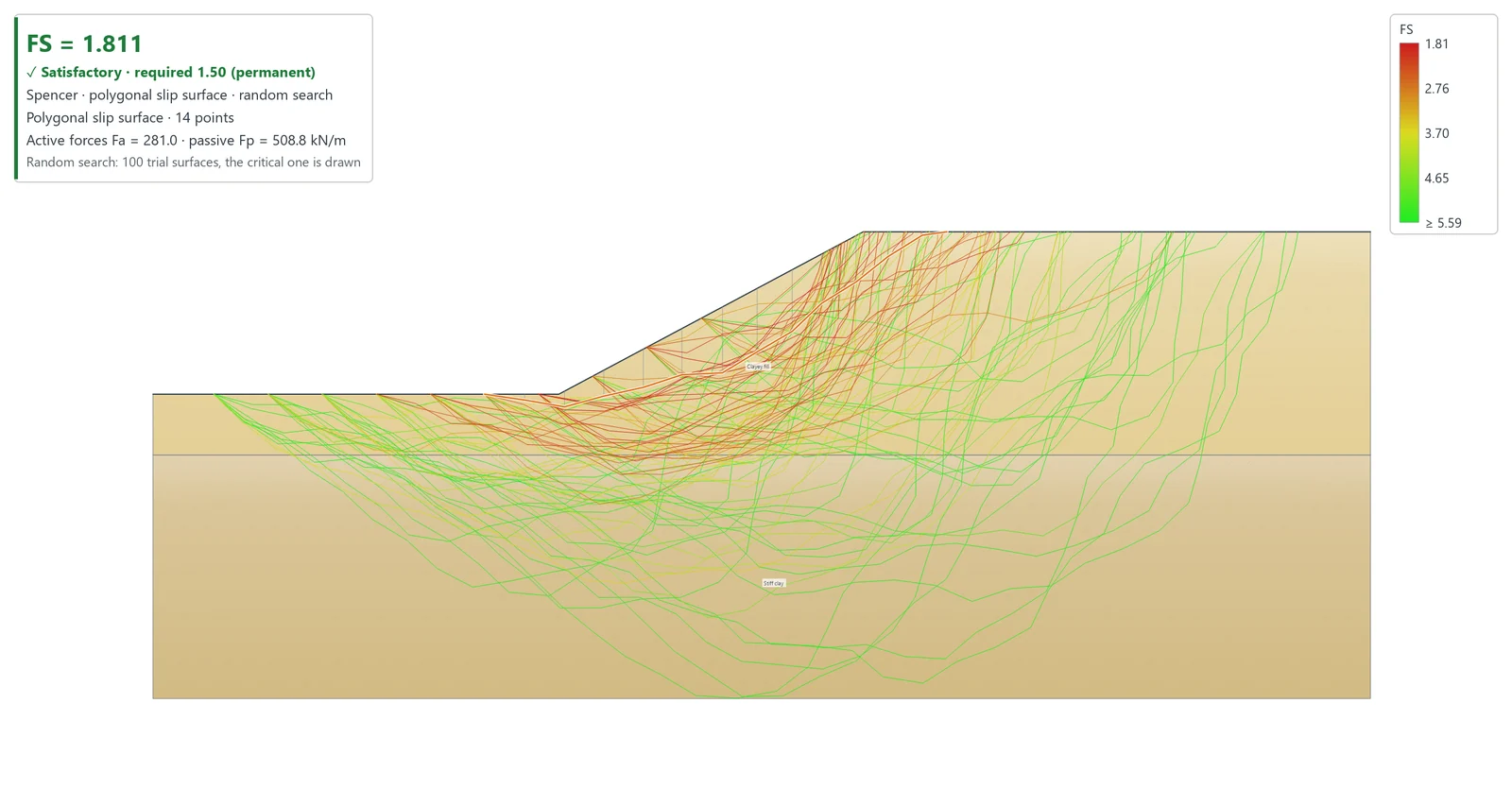
Polygonal surfaces through weak layers
Irregular random surfaces and the optimization of a polygon follow the weaker soil more freely than a circle; Sarma adds inclined block sides.
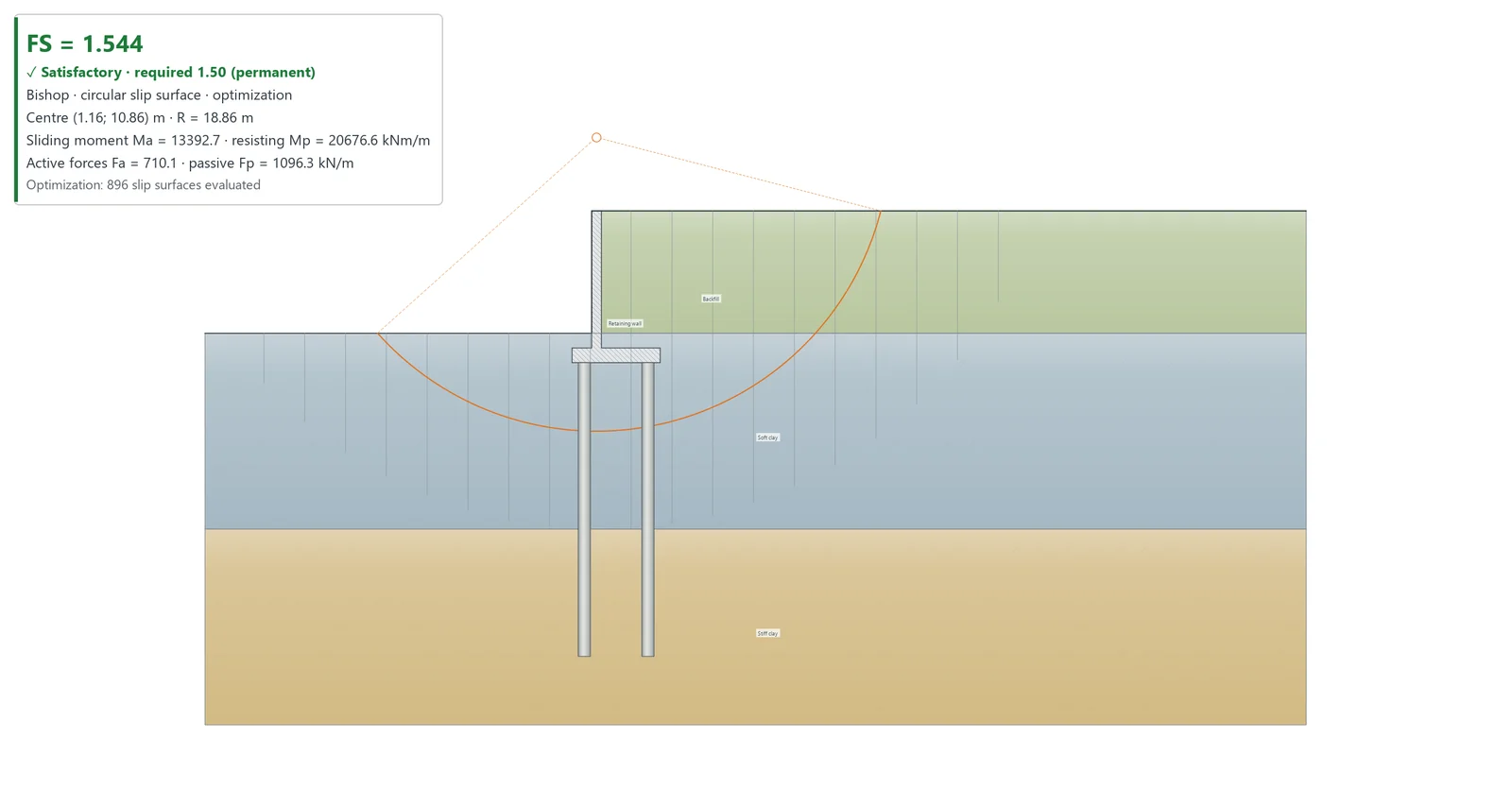
Walls on footings and on piles
Enter the wall as a rigid body and check the overall stability below its footing. Piles under the footing, spun piles for example, carry their shear where the slip surface crosses them.
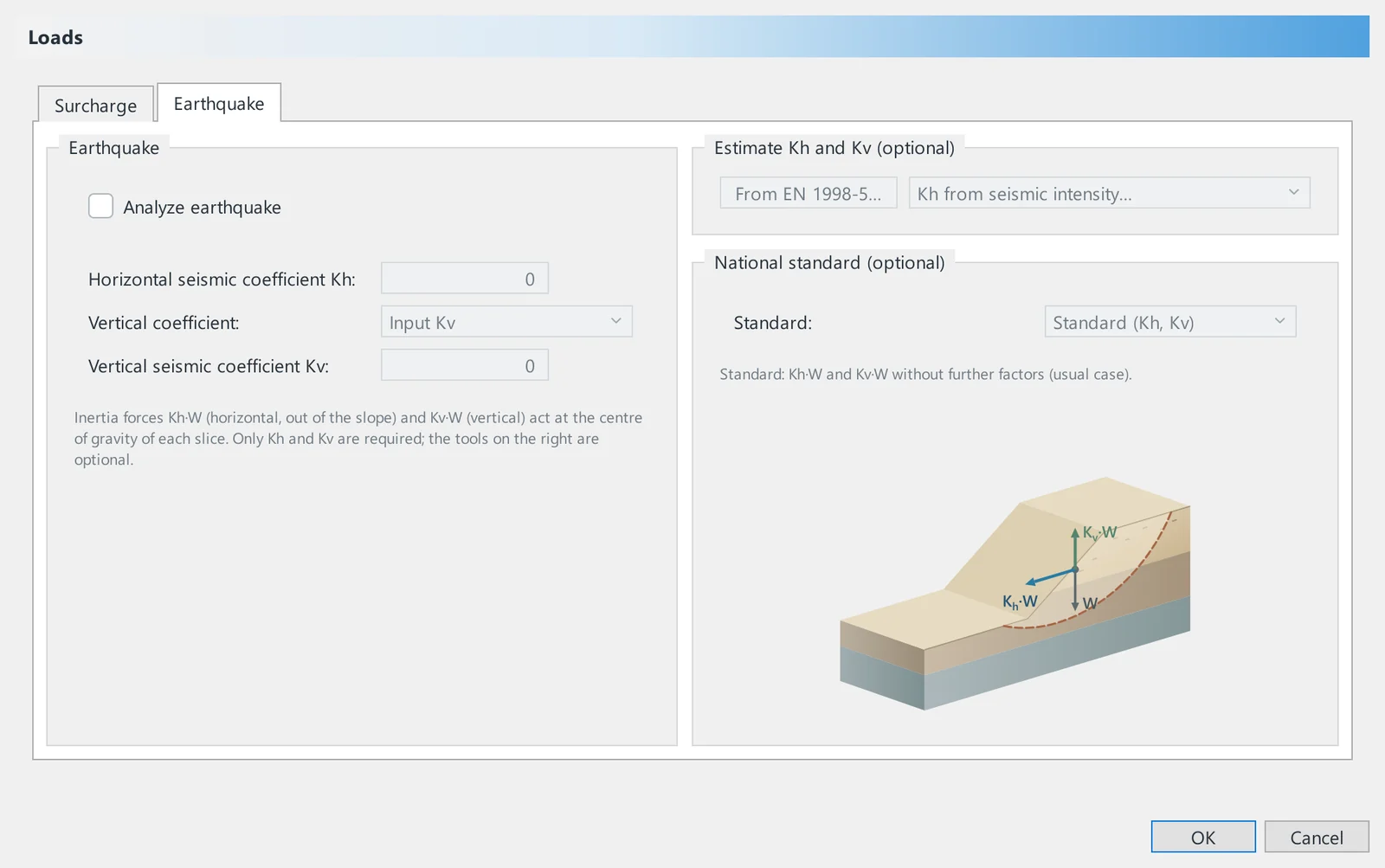
Pseudo-static seismic loading
Horizontal and vertical seismic coefficients entered directly, derived from the design ground acceleration, or following a seismic standard with its height distribution.
More from Solstability
Real screens of version 1.0.0. Select an image to see it full size.
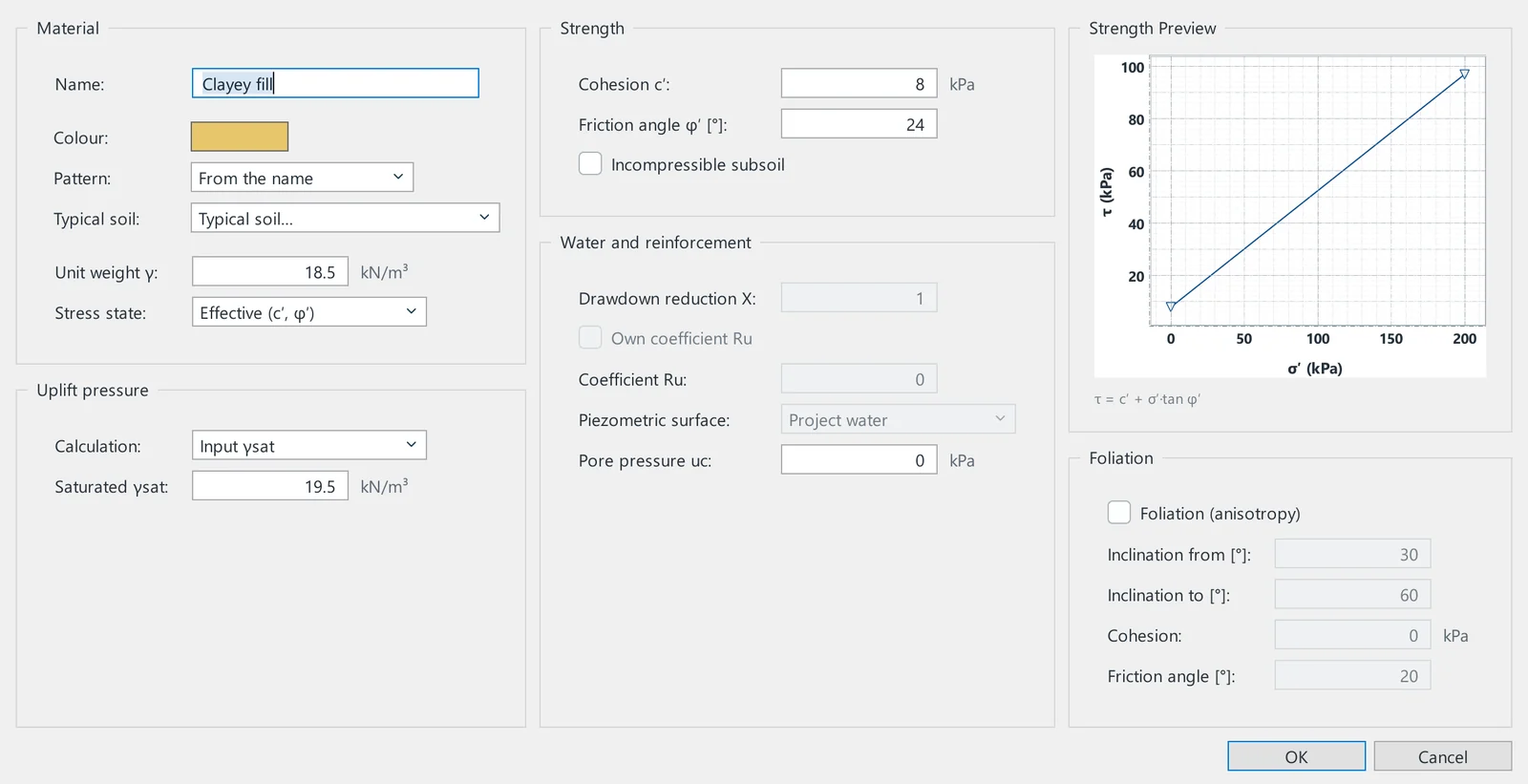
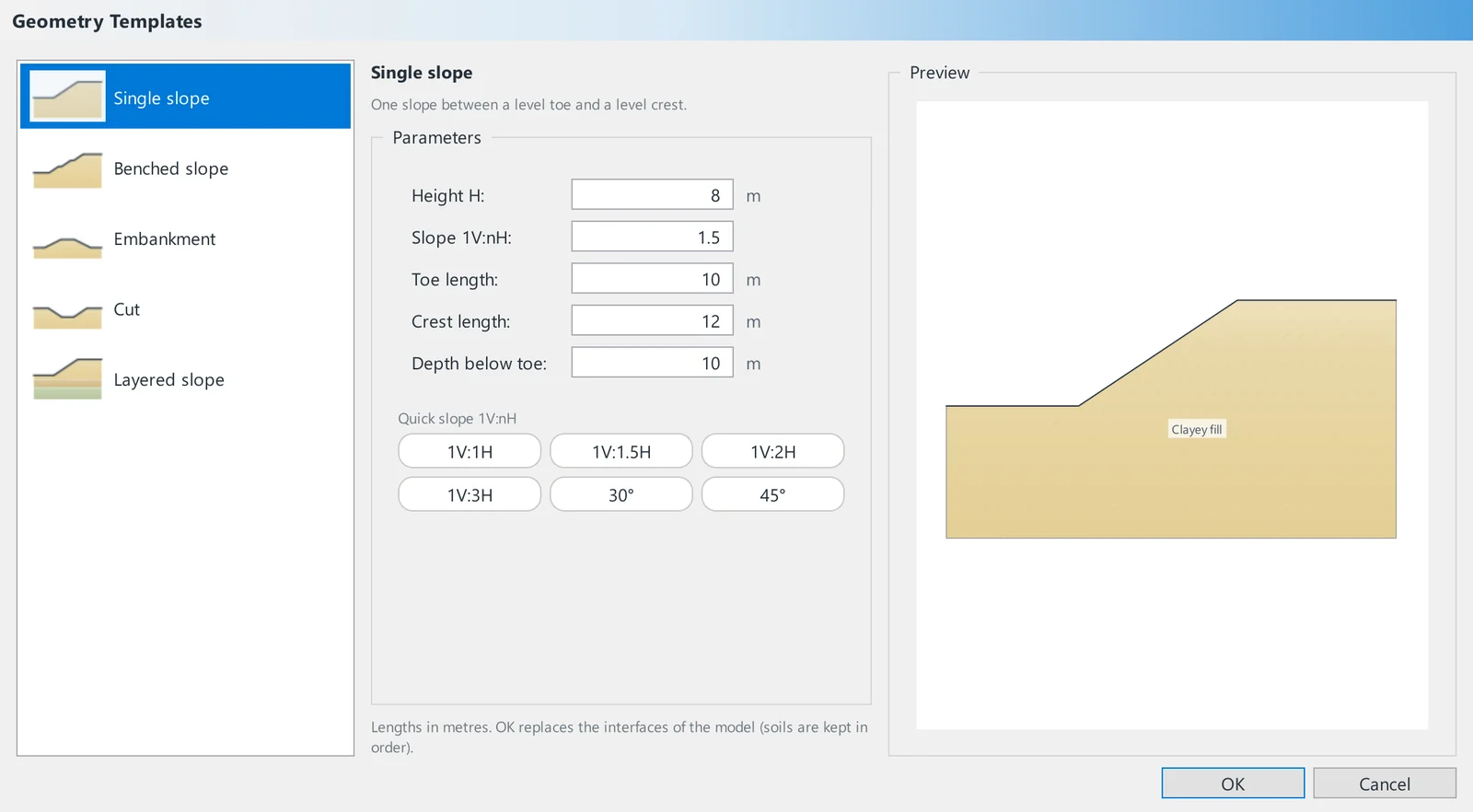
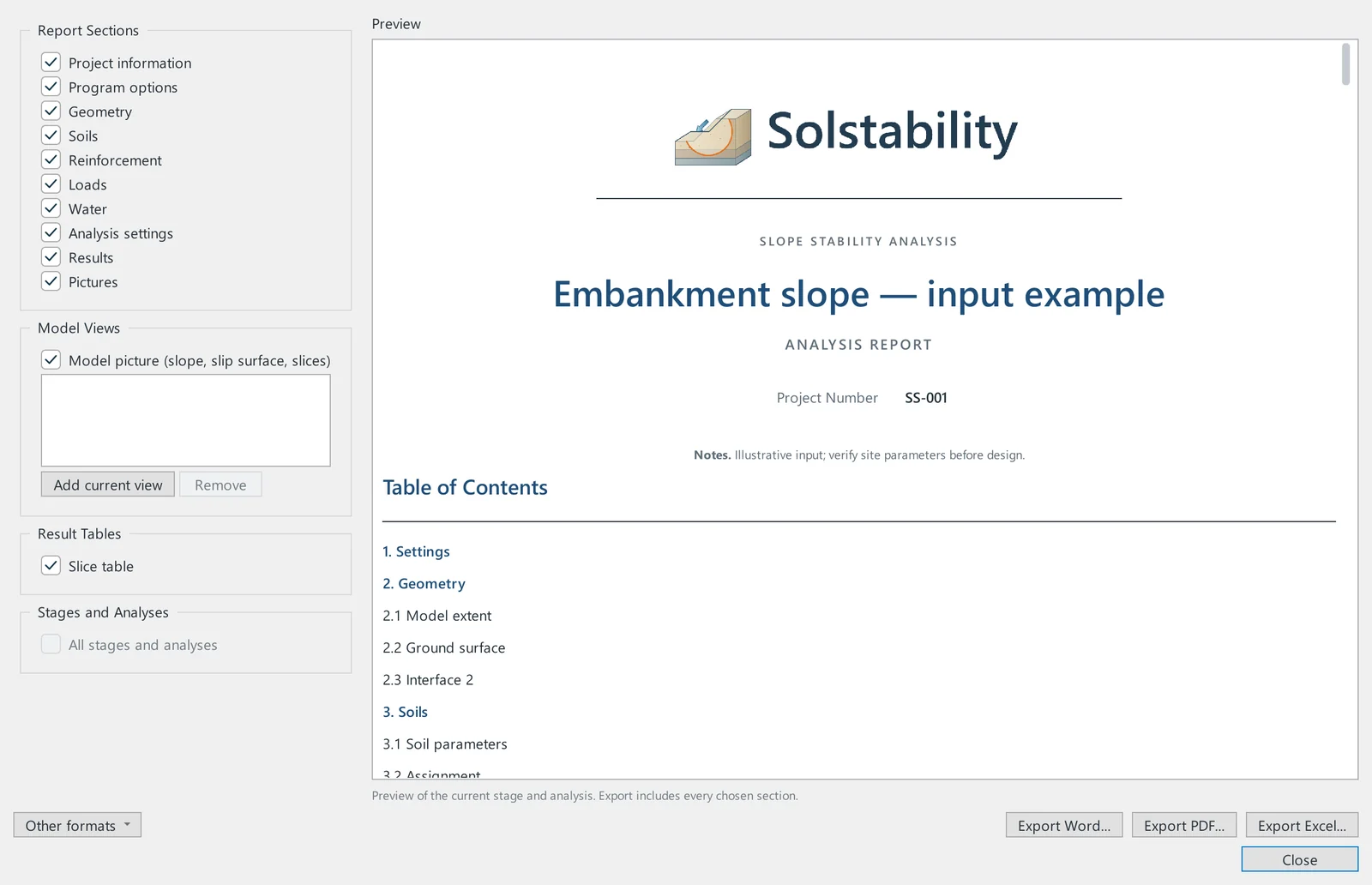
Technical capabilities
Slip surfaces & search
- Circular and polygonal slip surfaces, drawn or typed
- Optimization of circles and polygons; ends and points can be fixed
- Grid search of centres and radii, with rotation and refinement
- Random search of circles, irregular surfaces and sliding blocks through boxes
- Restrictions, tension cracks and rigid bodies
Methods
- Bishop, Fellenius / Petterson
- Spencer, Janbu, Morgenstern-Price (six interslice functions)
- Shahunyants, ITFM and Sarma
- All methods on one surface, with moments and forces
- Surplus sliding force for a design factor of safety
Soil & water
- Effective or total stress; anisotropy along a foliation
- Ground water table, ru, rapid drawdown, suction surface, pore pressure isolines
- Piezometric surface and pore pressure constant per soil
- Water above the ground acting as a load
Loads & reinforcement
- Strip, trapezoidal, line and point loads; permanent, variable or accidental
- Pseudo-static earthquake, direct or from a seismic standard
- Anchors, soil nails, geotextiles and stabilizing piles
- Pile shear resistance from the shear demand analysis of Solpile
- Construction stages with excavations and embankments
Verification & data
- Factor of safety, limit states, EN 1997 design approaches, LRFD 2012 and the Chinese standards
- SI and US units
- DXF and LandXML import, DXF drawings as a background
- Reports in PDF, Word, Excel and HTML; results as CSV and JSON
- Multi-file batch runs, command line, command files and an MCP server for AI assistants
System requirements
- Windows 10 or 11, 64-bit
- 4 GB memory (8 GB recommended); 1 GB disk
- Internet connection to sign in
Documentation
The same manuals that come with Solstability — read them before you install.
- User ManualBuild a model, search the critical slip surface and read the results, with a getting-started chapter and thirteen examples, six of them on slope treatments.
- Technical ReferenceSlip surfaces and slices, the limit equilibrium methods, the searches, reinforcement and verification.
- Release NotesWhat is new in version 1.0.1: force diagrams of anchors, nails, geotextiles and piles on the drawing, a drawn circle that follows the 0.1 grid, and six new examples on slope treatments. 1.0.0: the first release.
- Example reportA real PDF export from an illustrative model.
- Getting startedA short guide from soil profile to report.
- Video tutorialsWorked examples on YouTube, from an anchored cut to a retaining wall in an earthquake.
Learn from worked examples
Video tutorials, each a realistic slope from the first input to the report.


Questions
Is Solstability really free?
Yes. Download it and sign in with a Solplan account; the free licence is added to the account at the first sign-in. It is the full program, reports and exports included, without a trial period.
Which method should I use?
Bishop is the usual choice for circles. The methods that satisfy all equilibrium conditions (Spencer, Morgenstern-Price, Sarma) normally agree within a few percent; a large difference points to a surface with sharp corners, a missing tension crack or large point forces.
Is the analysis 2D or 3D?
Solstability analyses a two-dimensional section per metre run, by limit equilibrium. The 3D view shows the same model extruded, to check the input and the slip surface.
Can I use the pile shear from Solpile?
Yes. The depth of the slip surface at each stabilizing pile is given for the shear demand analysis of Solpile, and the resulting resistance of the pile is used in the stability analysis.
Download Solstability
Free to download and free to use. When Solstability starts, sign in with your Solplan account; the free licence is added to the account at the first sign-in.
- Install Solstability on Windows 10 or 11 (64-bit).
- Sign in with your Solplan account (e-mail and password, or Google). No account yet? Create one free.
- Start with File › Input examples, or follow the getting-started guide.
Solstability 1.0.1 for Windows
Download installer